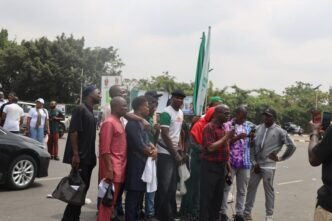

Abuja witnessed heightened political tension on Monday as protesters converged on the National Assembly Complex to oppose the Senate’s rejection of real-time electronic transmission of election results.
The protest drew a mix of students, civil society activists, members of the African Democratic Congress (ADC), and supporters of the Obidient Movement, all united by demands for greater transparency in Nigeria’s electoral process.
Leading the demonstration was Peter Obi, presidential candidate of the Labour Party (LP) in the 2023 general election, who joined protesters in calling on lawmakers to reconsider their position. The demonstrators urged the Senate to amend the Electoral Act to include a clause mandating the real-time transmission of election results from polling units.
Protesters carried placards and chanted slogans emphasizing the need to “protect the vote” and strengthen public confidence in elections. They argued that real-time transmission of results would reduce manipulation, enhance credibility, and reflect the true will of the people.
The group warned that rejecting electronic transmission undermines democratic progress and could erode trust in future elections if left unaddressed.
Security operatives were deployed around the National Assembly to maintain order as the protest remained largely peaceful. As of the time of filing this report, the Senate had yet to issue an official response to the demonstration.