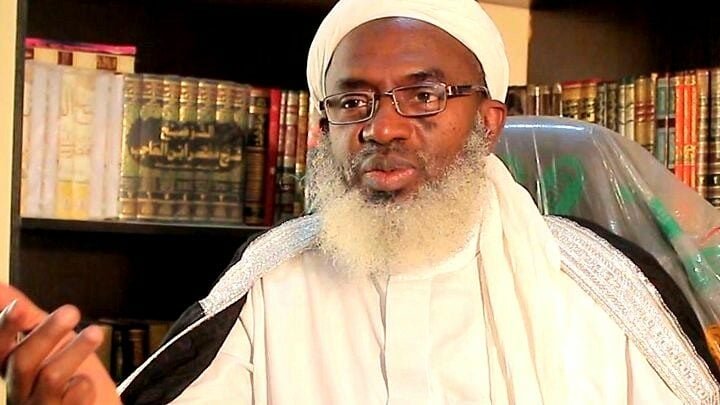
Renowned Islamic scholar, Sheikh Dr. Ahmad Abubakar Gumi, has filed a criminal complaint before a Chief Magistrate Court in Kaduna State against two Facebook users over alleged death threats, impersonation and defamation.
Court documents indicate that the case, marked KMD/685/25, was filed on December 24, 2025, following a controversial Facebook post allegedly published a day earlier. The defendants, identified as George Udom and Bello Isiaka, are accused of circulating a statement falsely attributed to Sheikh Gumi, which allegedly threatened the family of the Minister of Defence, General Christopher Musa, over ongoing military operations against bandits.
The post reportedly claimed that unless the Defence Minister halted military offensives, his family in Zangon Kataf, Southern Kaduna, would be attacked.
Through his legal team led by Suleiman Danlami Lere, Esq., Sheikh Gumi categorically denied authoring or endorsing the statement. He maintained that the defendants unlawfully used his name and photograph to portray him as a sponsor of violence and a threat to national security.
According to the complaint, the publication has exposed the cleric to serious security risks, damaged his reputation, and portrayed him as an advocate of terrorism, contrary to his long-standing public stance as a preacher of peace and dialogue.
The application before the court seeks the issuance of criminal summons against the defendants under relevant provisions of the Penal Code Law of Kaduna State, 2017, which address criminal defamation, false publication and incitement. If found guilty, the defendants could face severe legal penalties.
Sheikh Gumi stressed that the alleged publication was “wicked and dangerous,” warning that such actions could provoke retaliation from security agencies or members of the public against innocent individuals.
The case is widely seen as a strong signal to social media users on the legal consequences of spreading unverified information, impersonation and inciting content online. Legal observers say the outcome could further shape conversations around responsible social media use and accountability in Nigeria.